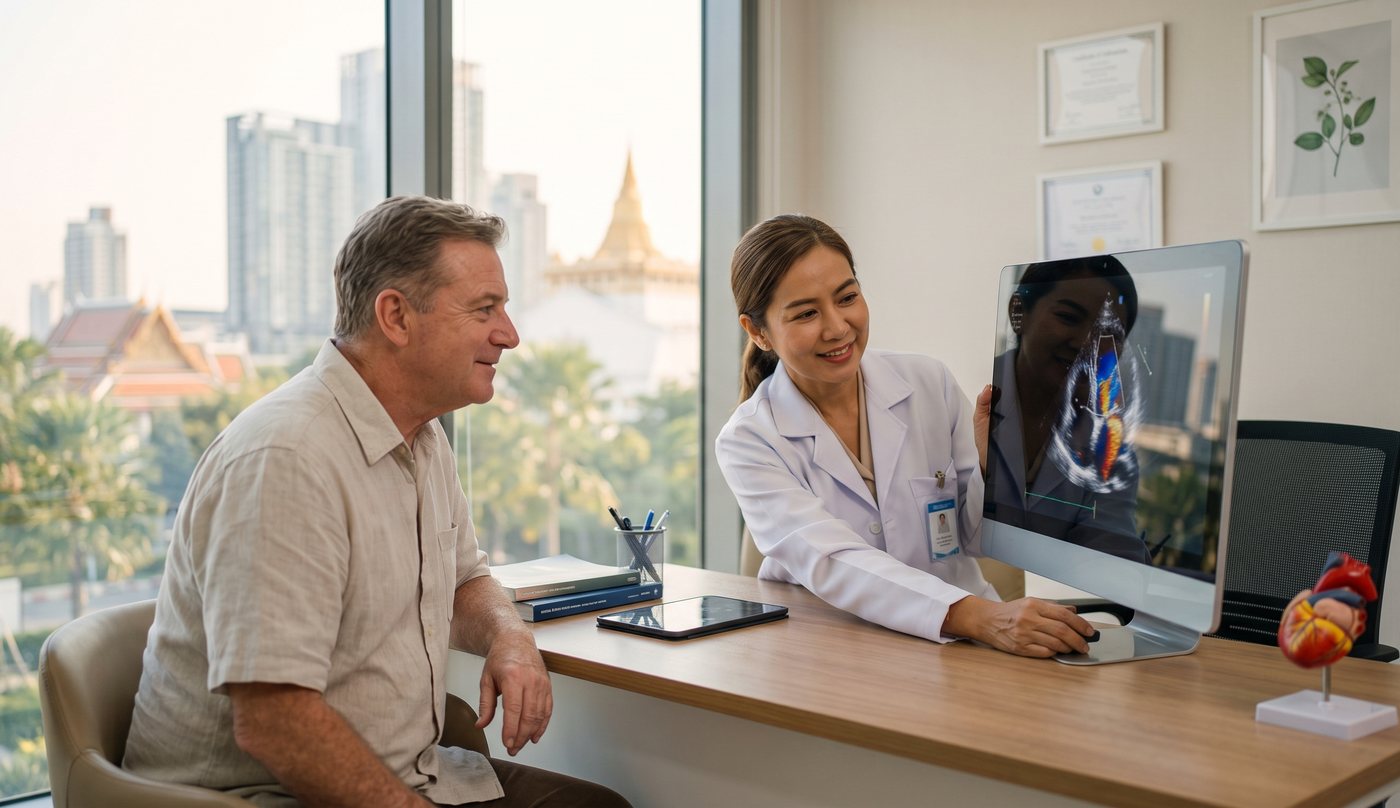
An abnormal stress test at home often means weeks of waiting for a referral while you sit with it. In Bangkok it can mean walking down the corridor and seeing a cardiologist the same afternoon. That is not a small difference when the organ in question is your heart.
“When it comes to your heart, waiting is the hardest part. During a required corporate annual physical, my treadmill stress test — the Bruce protocol — came back abnormal. Back in the U.S., that usually means waiting weeks for an insurance-approved referral while you sit at home panicking.
Instead, I walked straight over to a board-certified cardiologist at Bangkok Hospital that exact same day. I had my consultation, my full diagnostic workup, and clear answers immediately — and the entire out-of-pocket bill was around $500 USD. That level of speed and access completely changes how you handle a health scare.”
Mike lives in Bangkok and is managed for hypertension and an enlarged heart at Bangkok Hospital. This is his own care, not a case study.
Diagnostics are where the difference is most obvious, and they are what most people actually need. A full workup that costs several thousand dollars in the United States is a few hundred here, done in an afternoon.
| Procedure | Bangkok | United States | You save |
|---|---|---|---|
| Full cardiac workupstress test, echo, EKG and cardiologist consultation | about $450–700 | about $2,000–4,500 | ~80% |
| Cardiologist consultationon its own | about $44 | about $250–500 | ~90% |
| Heart bypass surgeryindicative only — see below | about $15,000–25,000 | $70,000–150,000+ billed | substantial |
Every other site in this business quotes a single number for heart surgery. We think that is misleading. A double bypass on an otherwise healthy 55-year-old and a quadruple on a diabetic 72-year-old who needs four days in intensive care are not the same operation and will not cost the same. The range above tells you the order of magnitude. Anything more precise has to come from a surgeon who has seen your angiogram.
When a Thai hospital quotes you a bypass, the figure normally covers the cardiothoracic surgeon, the perfusionist running the heart-lung machine, cardiac anaesthesia, seven to ten nights in hospital including intensive care, post-operative monitoring and the cardiac rehabilitation you do before discharge. It does not cover your flights, your accommodation after you leave hospital, or the blood thinners you will be on once you are home. Ask for that breakdown in writing — wherever in the world you have it done.
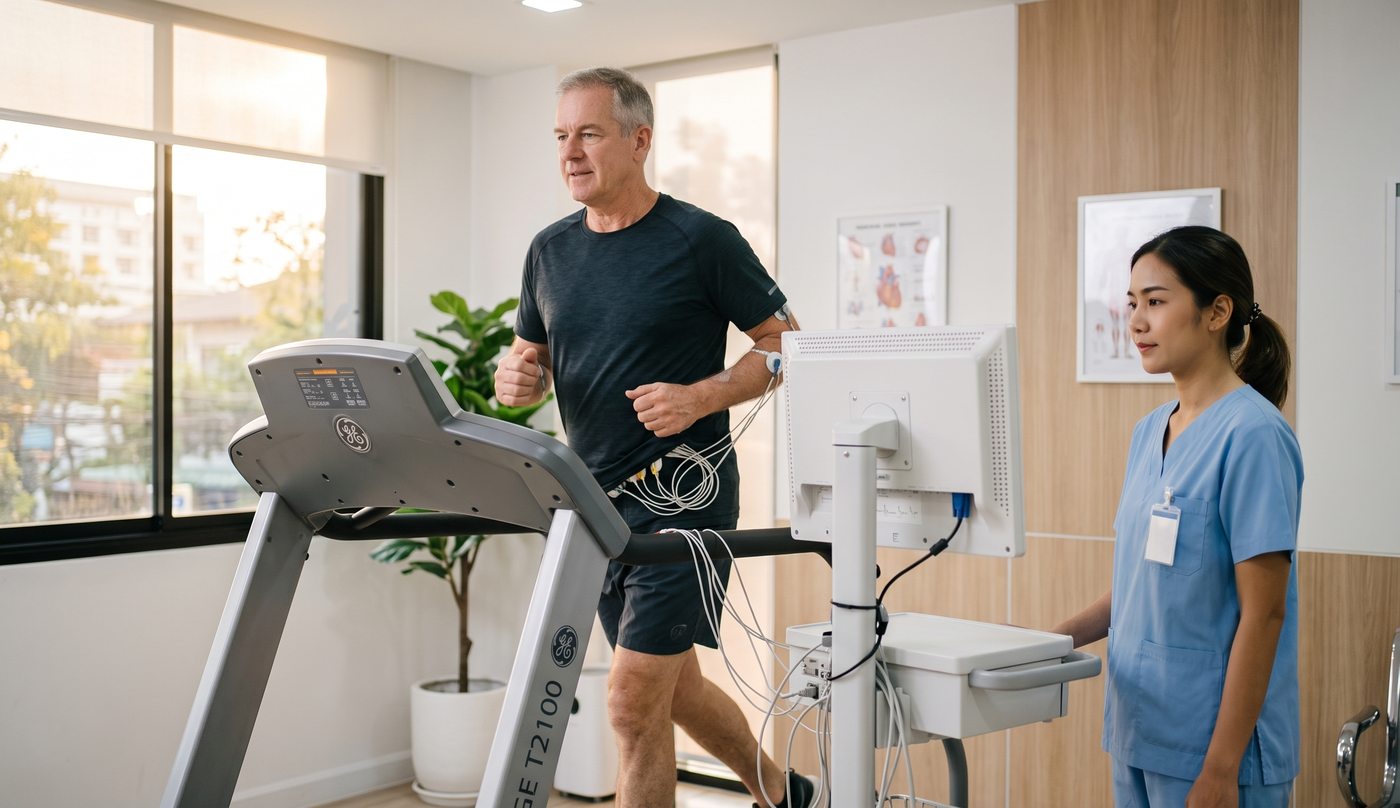
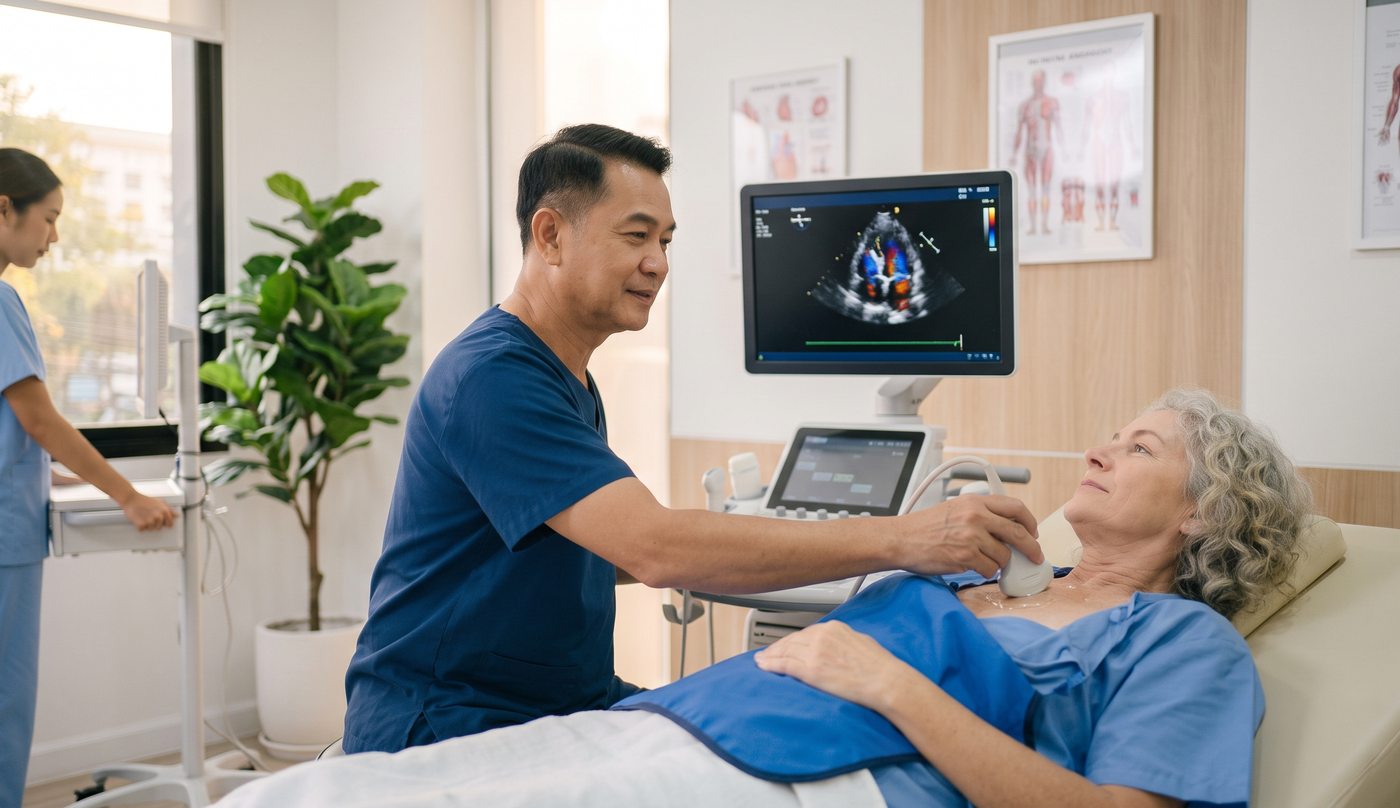
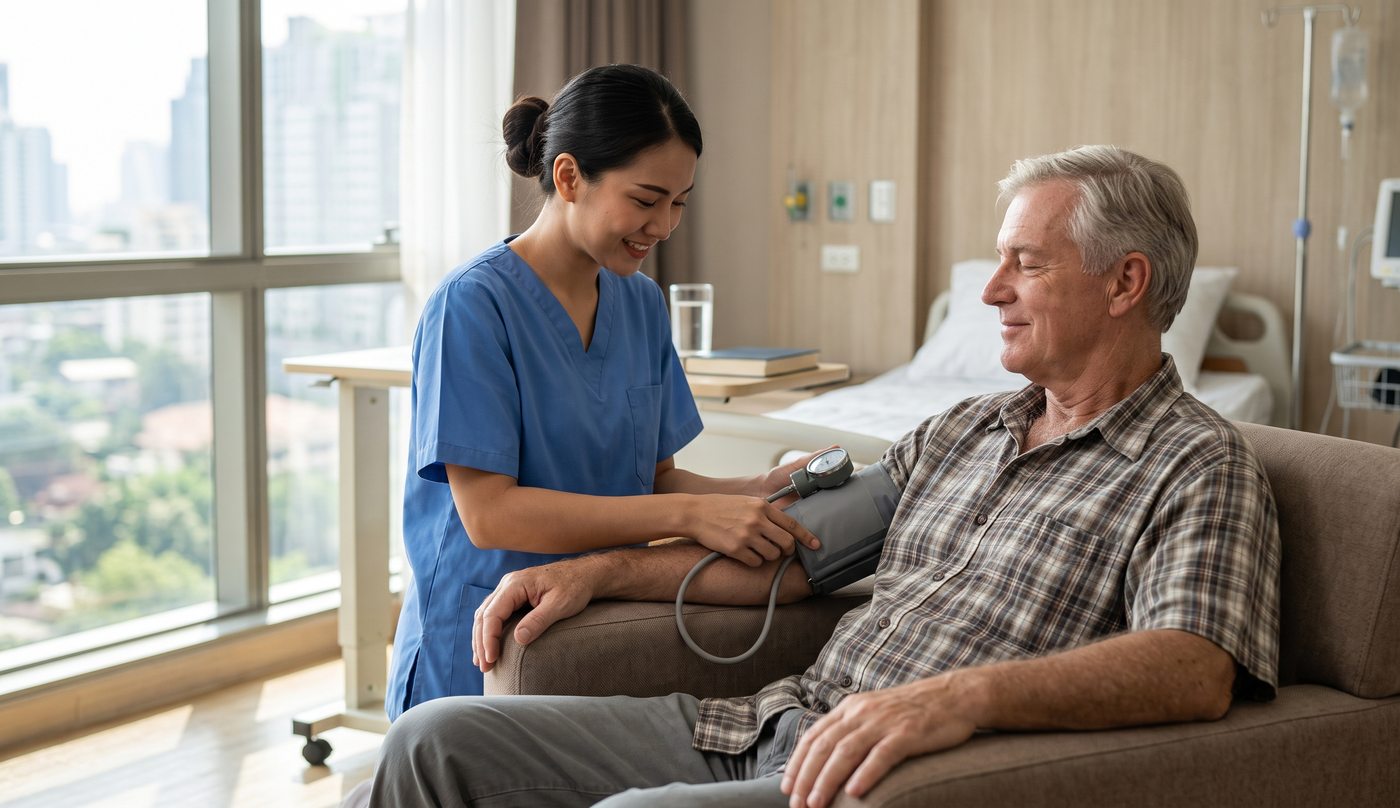
With most procedures, waiting three months is miserable. With a heart, waiting can be the whole problem.
An abnormal result can be followed by a consultation, an echocardiogram and an answer inside a single afternoon. No referral, no pre-authorisation, no queue.
Not a nurse practitioner, not a registrar. A board-certified cardiologist, many of them fellowship trained in the US, UK or Australia, who sits down and shows you the images.
Bloods, echo and stress test read the same day. You walk out knowing, rather than waiting a fortnight for a phone call.
Agreed before you start. No separate invoices arriving from the hospital, the cardiologist and the lab over the following two months.
This is the most important thing on this page, and it costs us business to say it.
If you are having symptoms now — chest pain, pain in your arm or jaw, breathlessness at rest, fainting, or symptoms that are getting worse week by week — do not book a flight. Go to your nearest emergency department today. Unstable heart disease is the one condition where travelling for cheaper care can kill you, and a long-haul flight is exactly the wrong place to find out how unstable it is.
Coming to Thailand for heart care makes sense when your condition is stable and the surgery is planned: you have a diagnosis, your cardiologist at home has said an operation is needed at some point, and the obstacle is cost or a waiting list rather than time. It also makes sense for diagnostics and second opinions, which is what most people actually come for.
If you tell us what is going on and we think you should be in a hospital at home instead of on a plane, that is what we will tell you. We would rather lose the booking.
You pay the hospital directly for your care. We never mark up your medical bill and we take no commission from any hospital. Our fee covers our own time and is agreed before anything is booked.
For cardiac care that means getting your records and prior imaging to the cardiologist before you arrive so the first appointment is useful rather than introductory, a car at the airport, accommodation close to the hospital rather than across the city, someone with you at appointments, and daily contact through recovery. For surgery it also means being the people who ring your family at home with an update while you are still in intensive care.
After a bypass you should expect roughly seven to ten nights in hospital and several weeks in Thailand before you are cleared to fly. Your surgeon sets that date, not your return ticket.
Cardiac medicine is about as standardised as medicine gets. The stents, the valves, the bypass technique and the monitoring are the same here — what differs is how long you wait and what it costs.
Thailand’s leading heart centres hold JCI accreditation — the same international standard used for American hospitals — and the cardiologists and cardiac surgeons we work with are board certified, many with fellowship training in the United States, the UK or Australia. The devices are the same brands used at home.
A cardiologist within twenty-four to forty-eight hours, often the same day. Diagnostics read while you wait rather than posted to you a fortnight later. For planned surgery, a date measured in weeks instead of a place on a list.
A doctor who puts your echo on the screen and talks you through it. A private room. Nurses who come when you call. And after cardiac surgery, intensive care staffed the way you would want it staffed.
One written quote before anything is booked. No pre-authorisation, no surprise billing, and no separate invoices from the hospital, the cardiologist and the lab turning up over the following two months.
Usually within twenty-four to forty-eight hours, and often the same day. There is no referral process and no insurance pre-authorisation to wait on — you book a named cardiologist and go. Mike's own abnormal stress test was followed by a consultation and a full workup on the same afternoon.
Around US$450 to US$700 in Bangkok for a treadmill stress test, echocardiogram, resting EKG and a consultation with a board-certified cardiologist. The equivalent self-pay cost in the United States is roughly US$2,000 to US$4,500. Mike paid about $500 for his.
Broadly US$15,000 to US$25,000, against typical US billed charges of US$70,000 to US$150,000 or more. We deliberately do not publish a single figure. The cost depends on how many grafts you need, your other conditions, and how long you spend in intensive care — so the real number has to come from a surgeon who has seen your angiogram.
No. Go to your nearest emergency department today. Travelling abroad for cardiac care is for stable, planned treatment — a known diagnosis where the obstacle is cost or a waiting list. Active or worsening symptoms need a hospital now, near you. We will tell you this ourselves if you describe symptoms like that to us.
Expect seven to ten nights in hospital after a bypass, then several weeks in Thailand before your surgeon clears you to fly. Flying too soon after cardiac surgery is genuinely dangerous, so the date comes from your surgeon rather than your airline booking.
Your stress test, your angiogram report, or just what your doctor at home has told you. We will come back with real numbers and an honest view of whether travelling makes sense for your case.