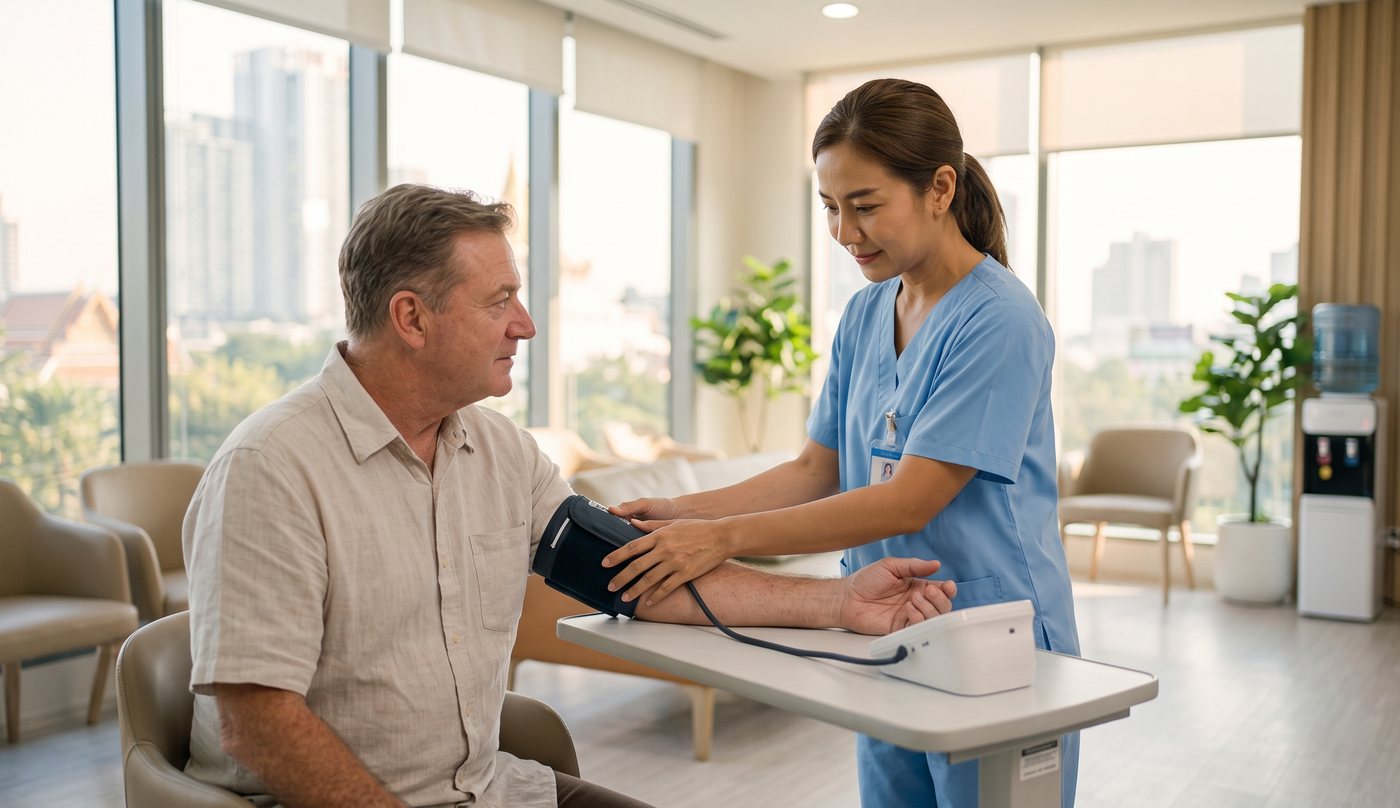
Mike has a comprehensive checkup at Bangkok Hospital every year. The most recent one cost 15,500 baht, about US$465, and included a physical, full bloods, a chest X-ray, an abdominal ultrasound, an EKG, a treadmill stress test, a hearing test, an eye examination and a dental exam with X-rays — then a doctor sat down and went through all of it the same day. One result needed a specialist, so he saw a cardiologist that afternoon. That consultation added 1,450 baht, about US$44. The whole day came to 16,950 baht, about US$509.
Screening is the cheapest thing on this whole website and the one most worth doing. It is also the easiest to try: no surgery, no recovery, no risk — a day of your holiday and a few hundred dollars.
| Screening | Bangkok | United States | You save |
|---|---|---|---|
| Comprehensive full-day checkupthe package described below | about $465 | about $2,000–4,500 | ~80% |
| Same-day specialist consultationwhen something needs a second look | about $44 | about $250–500 | ~90% |
| Basic screening packagebloods and physical | from about $30 | about $150–400 | ~85% |
| Abdominal ultrasoundas a standalone scan | about $60–120 | about $300–600 | ~80% |
| Treadmill stress testas a standalone test | about $100–180 | about $500–1,500 | ~85% |
The interesting column is the right-hand one. Almost everything in a Thai checkup exists in America too — but you have to have a reason for it, get a referral, book it separately and pay for it separately.
| What the day includes | Bangkok full checkup | Typical US annual physical |
|---|---|---|
| Doctor’s physical examination | Yes | Yes |
| Full blood count and chemistry | Yes | Usually |
| Chest X-ray | Yes | Only if there is a reason |
| Upper abdominal ultrasound | Yes — liver, gallbladder, kidneys | Referral and extra cost |
| Resting EKG | Yes | Only if there is a reason |
| Treadmill stress test | Yes | Referral and extra cost |
| Hearing test | Yes | Not included |
| Eye examination | Yes | Separate appointment |
| Dental examination | Yes — dentist and X-rays | Separate appointment |
| Sitting down with the doctor | Same day, in person | Results in a portal, follow-up visit |
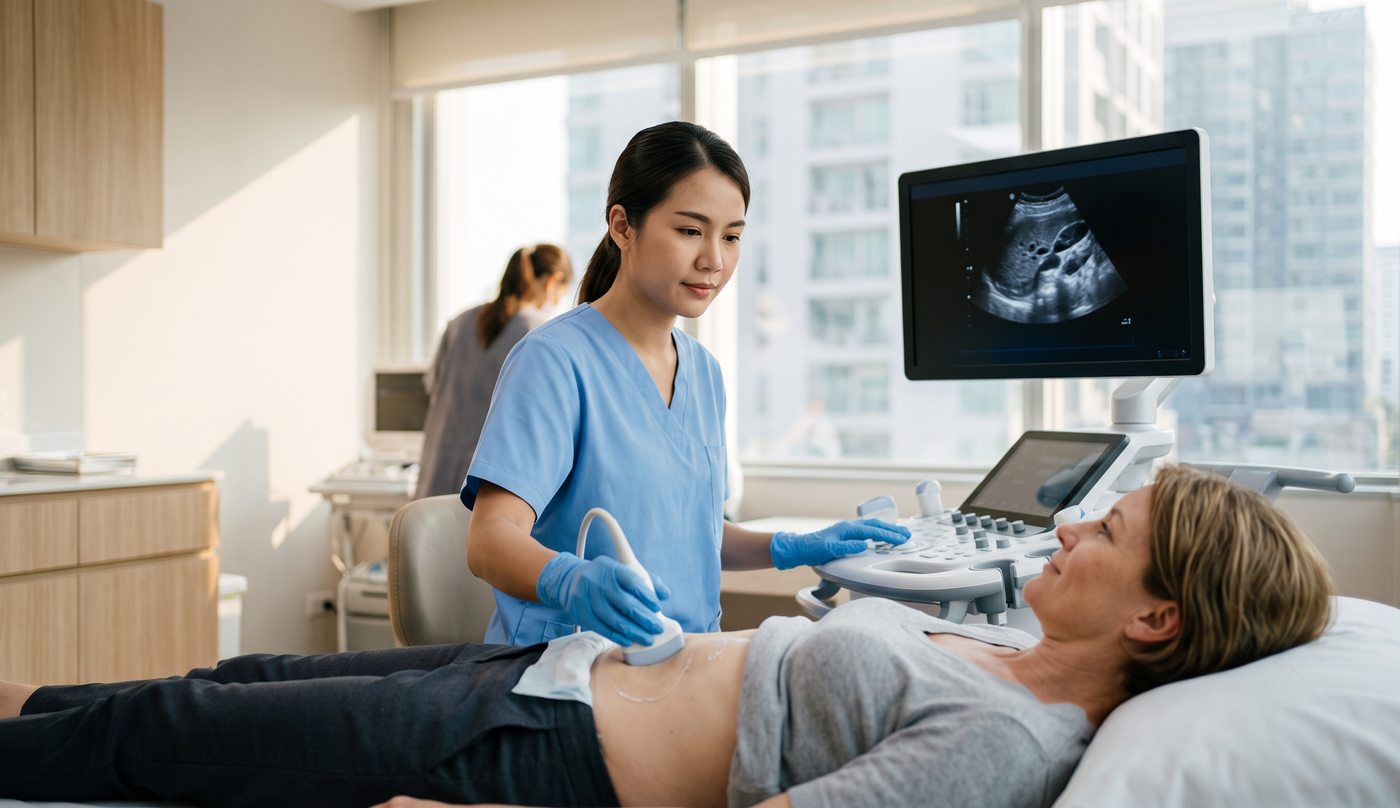
The abdominal ultrasound. Fifteen minutes, no radiation, and it looks at your liver, gallbladder and kidneys. It is the test most likely to find something you did not know about, and in most Western systems you cannot have one without a symptom and a referral. Here it is simply part of the day.
The treadmill stress test. The one that tells you how your heart behaves under load rather than sitting still. In the US it is a referral and several hundred to well over a thousand dollars. Here it is in the package, and if it comes back odd you can see a cardiologist the same afternoon.
You do not go home and wait. A doctor sits down with you, puts the results on the screen, and tells you what they mean — the same day, with written recommendations you take away signed by a named physician. Most people find that single hour worth the price of the whole thing.
One of Mike’s results needed a specialist opinion. He saw a consultant cardiologist the same afternoon, in the same building, and walked out with a written assessment signed by a named physician. That consultation cost 1,450 baht — about US$44. At home the same thing is a referral, a wait, and a bill several times that. This is the part of Thai healthcare that is genuinely hard to explain to people until they see it.
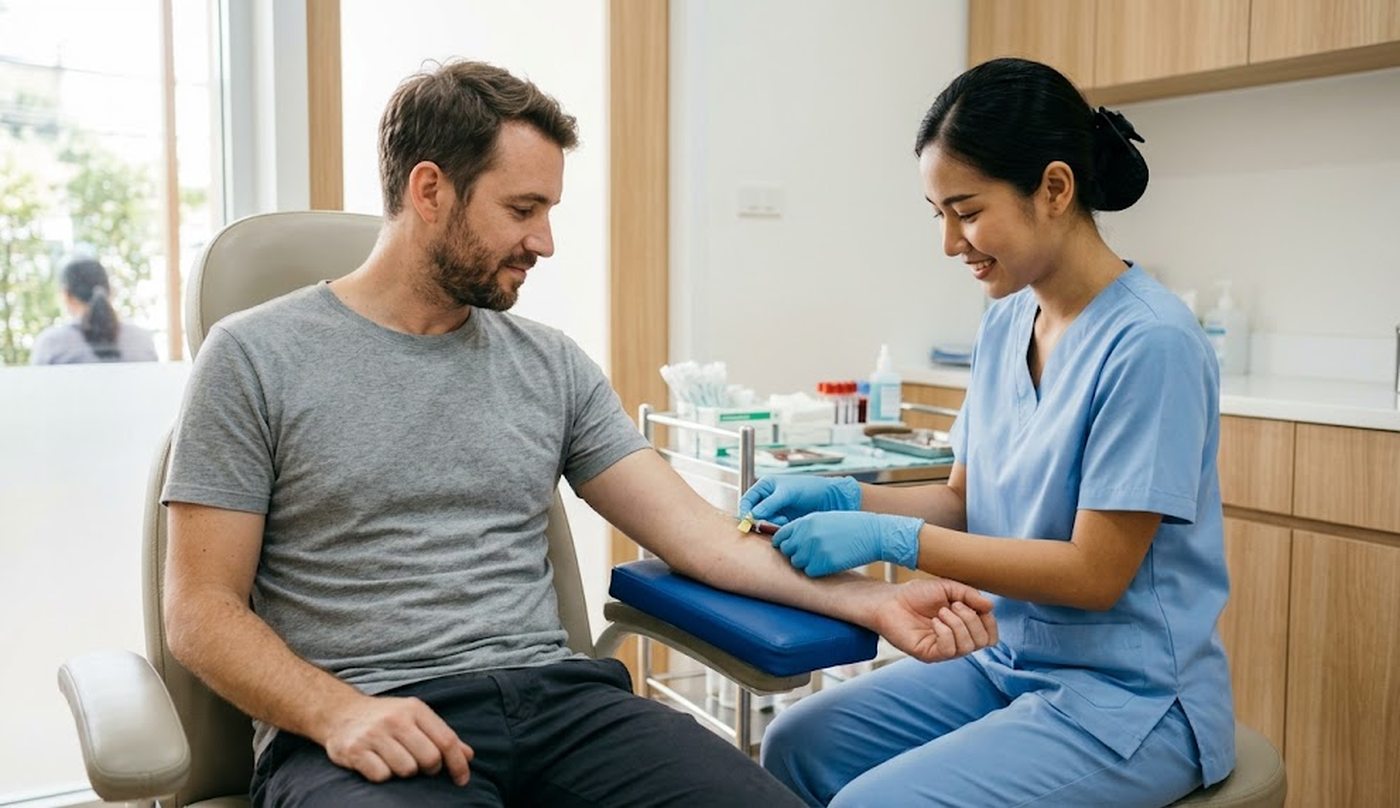
If you are curious about Thai healthcare but not ready to have surgery here, this is how to find out whether any of it is true.
You spend one morning of a holiday you were taking anyway. You see what the hospital looks like, how you are treated, how quickly things move, and whether a doctor here gives you more of their time than a doctor at home. Then you get a full picture of your own health for less than a night in a decent hotel costs in America.
A fair number of people who come for a checkup come back later for something bigger. Not because we sold them anything — because they saw it for themselves. That is the only reason we put this page in the order we did.
Comprehensive screening finds things. Most of them are harmless — a small cyst, a benign polyp, a number slightly outside a range — but they can lead to follow-up scans and anxiety that a symptom-led system would never have started. That is a real trade-off and it is worth going in knowing it. Some doctors at home are sceptical of annual whole-body screening for exactly this reason. We think it is worth it. We are not going to pretend there is no argument on the other side.
You pay the hospital directly for your screening. We never mark up your medical bill and we take no commission. Our fee covers our own time and is agreed first.
For a checkup that means booking the right package for your age and history rather than the most expensive one, telling you what to stop eating and when to fast, a car to the hospital for a 7am start, someone with you to help with the paperwork, and making sure you leave with your results in English, in a file your own doctor can read.
It is a half-day commitment on your side. Most people are finished before lunch.
Screening is where the difference in how healthcare is organised shows up most plainly, because nothing here is urgent.
The same tests, the same equipment, the same reference ranges. Thailand’s leading hospitals hold JCI accreditation — the same international standard used for American hospitals — and the laboratories are internationally accredited too.
The whole panel in a single morning, run as a circuit rather than a series of appointments booked across three months. No referral, no pre-authorisation.
Somebody walks you between stations. The results are read while you wait. Then a doctor sits down and goes through every line with you, and you leave with a written summary rather than a login.
One price, published in advance, for a defined list of tests. You know before you arrive what you are having and what it costs.
A comprehensive full-day package at a leading Bangkok hospital runs around US$450 — we paid 15,000 baht in August 2026. Basic packages start much lower, from around 990 baht. The equivalent self-pay cost in the United States is roughly US$2,000 to US$4,500 once you add the ultrasound, stress test and imaging that are bundled in here.
A comprehensive package typically includes a doctor's physical examination, full blood count and blood chemistry, a chest X-ray, an upper abdominal ultrasound covering liver, gallbladder and kidneys, a resting EKG, a treadmill stress test, a hearing test and an eye examination — then a same-day consultation where a doctor goes through the results with you. Contents vary by package, age and history.
Most people are finished in a morning. It runs as a circuit rather than a series of separate appointments, and the results are read while you are still there, so you have your debrief the same day rather than waiting a fortnight for a portal notification.
Yes, usually 8 to 12 hours for the blood work and the abdominal ultrasound. We tell you exactly when to stop eating and drinking, and we book an early start so you are not fasting all day.
We think so, but there is a genuine argument on the other side and we would rather you heard it from us. Comprehensive screening finds incidental things — small cysts, benign polyps, borderline numbers — that can lead to follow-up scans and worry a symptom-led system would never have started. It also finds things early enough to matter. Go in knowing both.
Tell us your age and anything in your history, and we will suggest the right package rather than the biggest one — with the real price before you book.